
UPDATE – JANUARY 2026:
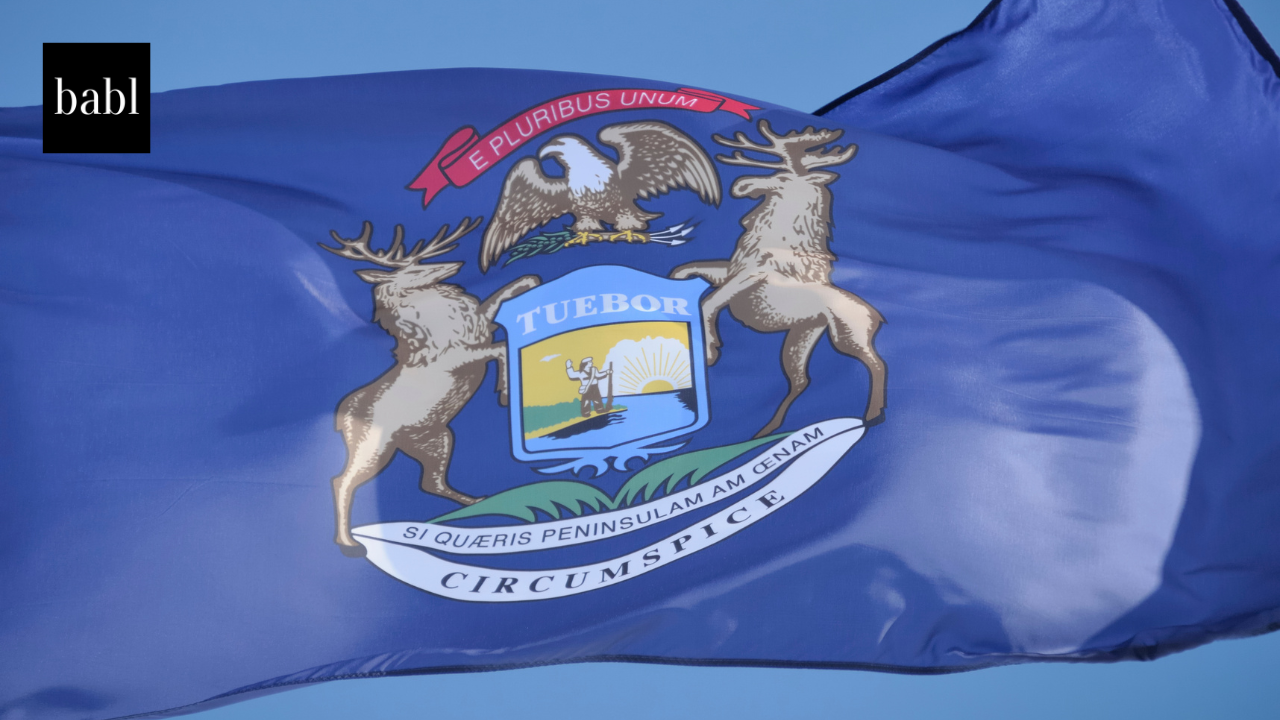
Michigan became one of the first U.S. states to enact comprehensive legislation regulating AI-generated content in political campaigns. The five-bill package—House Bills 5141 through 5145—was signed into law by Governor Gretchen Whitmer in late 2023 and imposes strict disclosure requirements and penalties for deceptive AI use in election-related media. Enforcement mechanisms are now in effect.
ORIGINAL NEWS STORY:
Michigan State Lawmakers Introduce AI Bills Involving Political Ads
A bipartisan group of lawmakers in Michigan is taking a distinctive stance by addressing the use of AI in political campaigns. Michigan state Representatives Penelope Tsernoglou, Matthew Bierlein, Ranjeev Puri, and Noah Arbit introduced a comprehensive legislative package known as the “Regulate Use of Artificial Intelligence for Political Campaigns,” comprising House Bills 5141-5145. This package, introduced on October 12 and subsequently approved on October 17, aims to regulate and establish restrictions on the use of AI in political campaigns, alongside imposing disclosure requirements.
Disclosure Rules and Deepfake Restrictions
House Bill 5141 specifically targets the prohibition of manipulated media in political campaigns. It mandates the disclosure of AI-generated media use. The bill introduces a private right of action for candidates adversely affected by violations.
House Bill 5142 requires political advertisements and other political communications using AI-generated media to disclose that use and prohibits AI-generated impersonation of candidates or public officials.
As for House Bill 5143, it defines AI for the bills’ purposes, while prohibiting the distribution of deepfakes, accompanied by a definition. House Bill 5145 amends several codes, making it a crime to distribute materially deceptive media with the intent to influence an election. Also, Representative Tsernoglou presented a PowerPoint on AI-generated content.
Penalties for Non-Compliance
The proposed penalties under the legislative package are stringent. A first violation could result in up to 93 days in prison and/or a fine of up to $1,000. A second violation escalates the top fine to $1,500. A third violation is deemed a felony, attracting up to two years in prison and/or a fine of up to $2,000. Each publicly aired or distributed ad incurs a separate fine. The bills explicitly exclude news broadcasts and satire. Notably, Michigan is one of 10 U.S. states with a full-time legislature, convening throughout the year, as opposed to the part-time legislatures in the majority of states.
Also, listen to BABL AI Chief Ethics Officer Jovana Davidovic discuss this topic on NPR’s Detroit Today here.
Need Help?
Also, for insights into how Michigan’s House Bills 5141-5145 may impact your business, consider reaching out to BABL AI. Their team of Audit Experts can provide guidance on this regulation and other AI-related regulations, addressing your specific questions and concerns.