
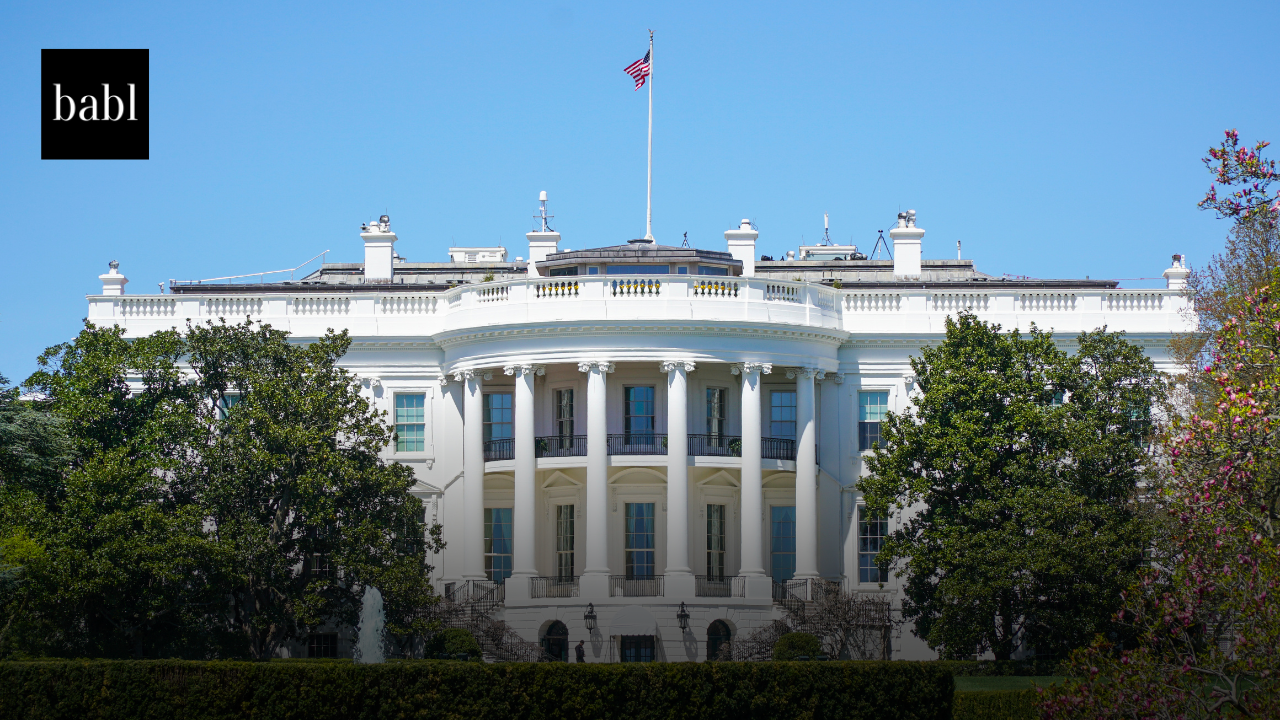

President Donald J. Trump signed a sweeping executive order on Thursday establishing a national policy framework for artificial intelligence and directing federal agencies to challenge state AI laws the administration views as burdensome, unconstitutional, or harmful to U.S. technological competitiveness. The order, issued December 11, argues that America’s ability to “win the AI race” requires removing regulatory barriers at the state level and replacing what it calls a “patchwork” of conflicting rules with a unified federal standard.
The administration frames the order as a continuation of its earlier efforts to accelerate AI adoption, asserting that deregulation has unlocked “trillions of dollars of investments” and strengthened national security. The directive sharply criticizes state-level policies—particularly algorithmic discrimination and transparency laws—as requiring “ideological bias” in AI models or compelling disclosures that could violate constitutional protections.
To counter these laws, the order creates an AI Litigation Task Force within the Department of Justice. The unit will be responsible for suing states whose AI regulations the administration deems inconsistent with federal policy, including laws that require models to adjust outputs or that purportedly burden interstate commerce.
The Commerce Department must also publish, within 90 days, a federal evaluation identifying state laws considered “onerous” or in conflict with the administration’s goals. Those states risk losing access to certain federal funds, including portions of the Broadband Equity Access and Deployment (BEAD) Program, unless they agree not to enforce their AI laws during funding periods.
The executive order also directs the Federal Communications Commission to consider adopting an AI reporting and disclosure standard that would preempt state requirements, and instructs the Federal Trade Commission to clarify when state mandates that alter “truthful outputs” of AI systems constitute deceptive practices under federal law.
Finally, White House advisors are tasked with drafting legislation establishing a national AI framework that supersedes conflicting state laws, with exceptions for child safety, data center infrastructure, and state procurement. The administration says a unified standard is necessary to secure U.S. leadership in AI and prevent regulatory fragmentation.
Need Help?
If you’re concerned or have questions about how to navigate the global AI regulatory landscape, don’t hesitate to reach out to BABL AI. Their Audit Experts can offer valuable insight and ensure you’re informed and compliant.