
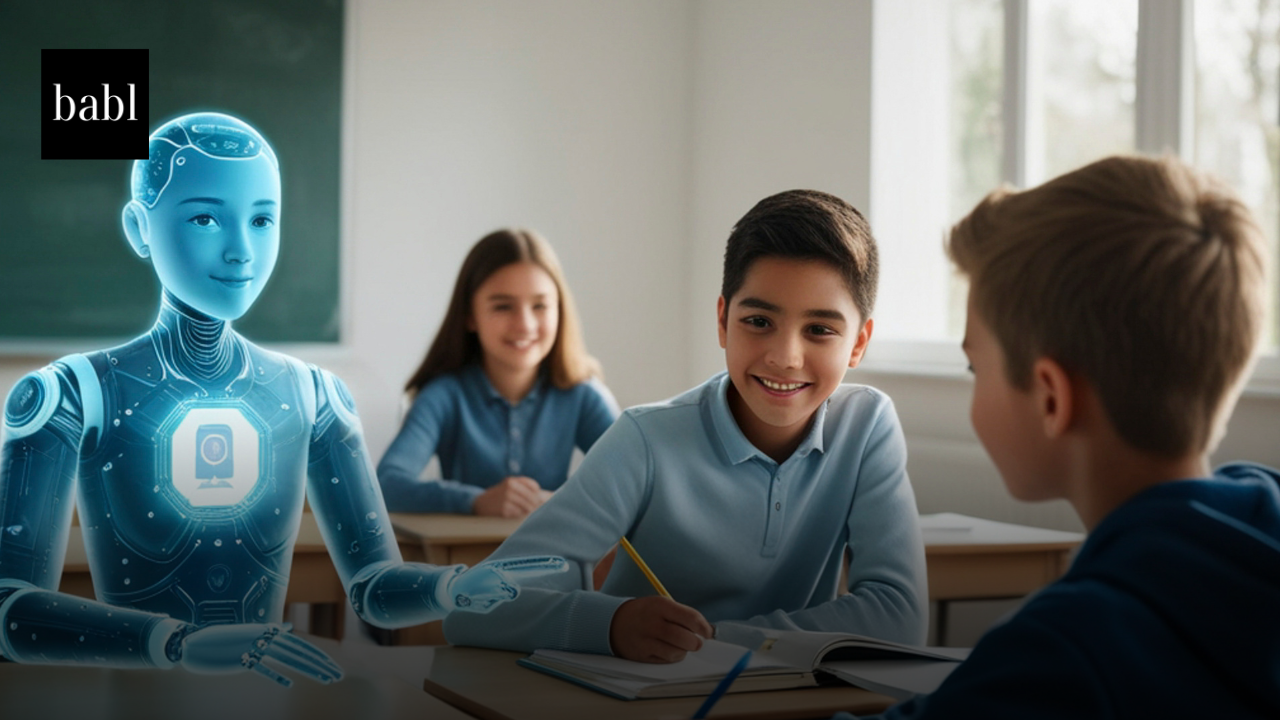

A sweeping new report from the Brookings Institution warns that artificial intelligence is becoming deeply embedded in children’s academic and social development, creating both opportunities for learning and significant risks that schools are not yet equipped to manage. The study — “A New Direction for Students in an AI World: Prosper, Prepare, Protect” — calls for urgent action to shape how students interact with AI and to mitigate effects on cognitive, social, and emotional growth.
Released in January 2026, the report examines how rapidly AI has entered daily student life following the arrival of generative systems such as ChatGPT in late 2022. By August 2025, more than 700 million global users were using ChatGPT, many of them students leveraging AI for tutoring, brainstorming, academic writing, and other tasks .
Brookings researchers conducted a year-long “premortem” involving 505 participants across 50 countries — including students, teachers, and parents — to catalogue how AI is reshaping education and childhood development and to identify the conditions under which the technology may enrich or erode learning .
The report finds that while AI can expand access to learning, personalize instruction, support students with disabilities, and reduce administrative burdens on teachers, those benefits are currently overshadowed by risks ranging from privacy and safety concerns to diminished critical thinking and overreliance on automation. Among its core findings: children are increasingly using AI outside school, often without oversight; AI tools can displace cognitive effort by “outsourcing” thinking; and families, rather than education systems, have become the frontline mediators of AI use .
Brookings frames AI as a force that could “enrich” or “diminish” development depending on its implementation. Risks include potential harms to attention, reasoning, social relationships, and agency, as well as data collection practices that leave minors exposed without dedicated privacy protections. These risks are amplified by commercial platforms not designed with children in mind, the report notes.
To respond, the authors outline a framework built around three imperatives: “prosper,” by leveraging AI for learning; “prepare,” by equipping students with AI literacy; and “protect,” by setting regulatory, safety, and ethical guardrails for products and schools .
Rather than endorsing bans or accelerationism, Brookings argues that outcomes hinge on design, pedagogy, and collaboration between educators, families, policymakers, and technology developers. “Ultimately, the trajectory of AI will be determined not by fatalism or passive acceptance, but by deliberate choices,” the report states .
Need Help?
If you have questions or concerns about any global guidelines, regulations and laws, don’t hesitate to reach out to BABL AI. Their Audit Experts can offer valuable insight, and ensure you’re informed and compliant.